Reaching Gen Z and Gen Alpha: a field guide for charities, museums, attractions and public sector organisations
|12 min read

Building tomorrow's supporters, volunteers and donors in a regulated, post-smartphone-ban Britain
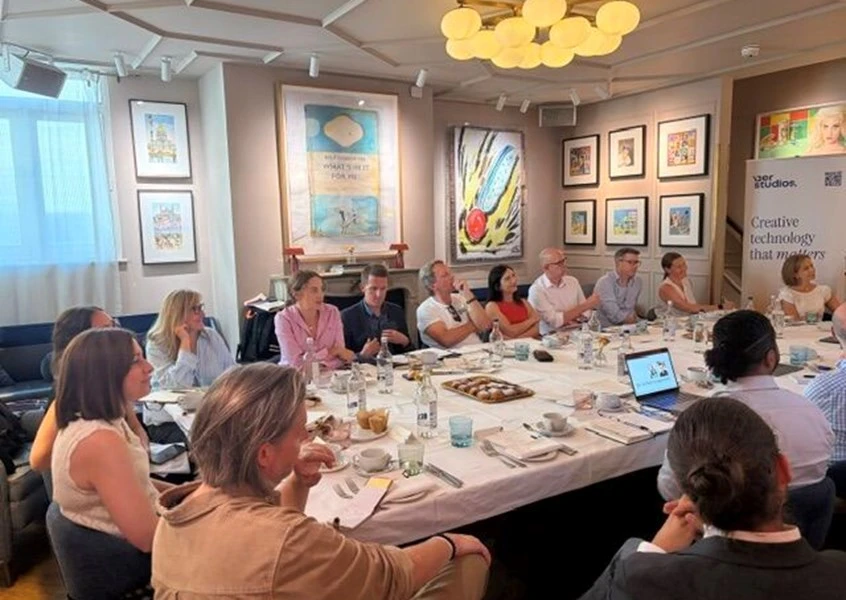
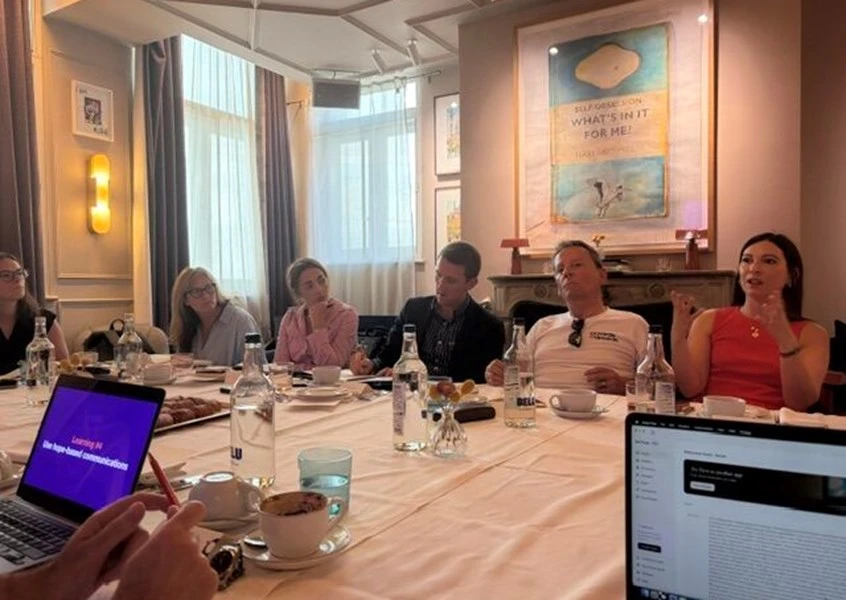
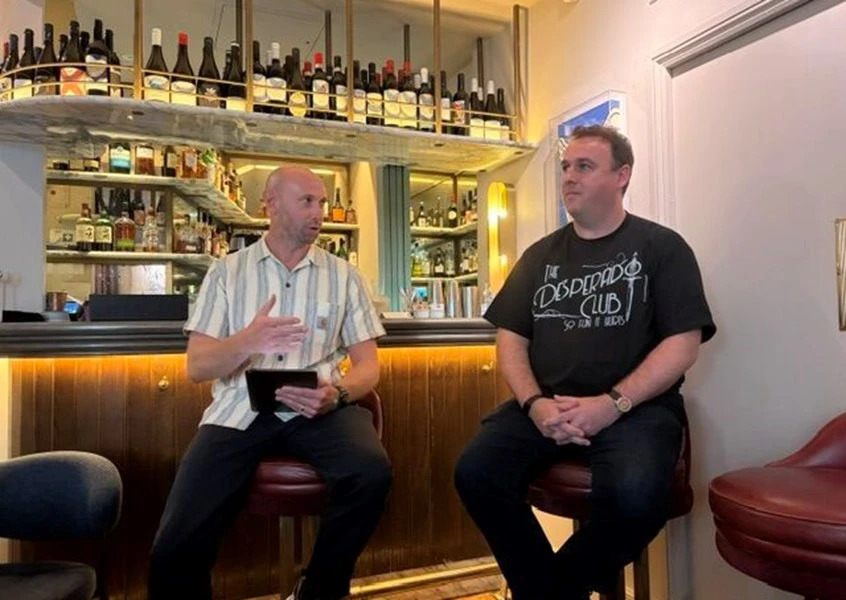
Following up on our Groucho Club Leaders Lunch, July 2026
Executive summary
Gen Z (born 1997-2012) and Gen Alpha (born 2010-2024) have not switched off from causes, culture or civic life. They have switched channels - often to ones the charity, heritage and public sectors have been slow to take this seriously - with some seriously innovative exceptions.
Purpose Union's Purpose Pulse research found Gen Z rank cost of living, mental health, home ownership, economic inequality and climate change as the defining pressures of their generation, yet this cohort remains more hopeful about the future than Millennials were reporting at the same age, and already out-paces older generations on petition-signing and volunteering.
The sector's discomfort sits in the giving figures. NfpSynergy's long-running quarterly tracker put UK public giving participation at its lowest level in well over a decade, and separate polling finds Gen Z the age group most likely of any generation to say they planned to reduce their charitable giving that year.
Read on its own, that looks like disengagement. Read alongside Enthuse's Donor Pulse research - which found 61% of Gen Z donors keen to take part in future fundraising - and Charity Times' 2024 finding that Gen Z adults are now the UK age group most likely to have personally fundraised for a cause, it looks like something else entirely - a generation still willing to act, but increasingly unwilling to give in the format the sector still defaults to.
Two forces will reshape this picture over the next 18 months.
First, the UK's under-16 prospective social media ban and wider smartphone/AI restrictions, expected in force from spring 2027, will fundamentally change how organisations can reach the youngest end of Gen Z and all of Gen Alpha.
Second, neurodivergence, accessibility and digital exclusion are not edge cases for this cohort - an estimated 15% of the UK population is neurodivergent, and families raising disabled children are significantly more likely to be digitally excluded even as digital access becomes more essential to their independence and social connection.
This field guide sets out the evidence, sector and commercial examples, and a practical framework - building on the four pillars discussed at our July event (strong supporter experiences, transparency about impact, meeting people where they are, and gaming) - for turning Gen Z and Gen Alpha into today's supporters and tomorrow's donors.
Who are we actually talking about?
Gen Z came of age during austerity, Brexit, the long shadow of the 2008 financial crisis, COVID-19 and a cost-of-living crisis.
Purpose Union's Tom Hunt describes this as the "Zillennial" experience - political and economic instability layered underneath the rise of the smartphone. Gen Z have never known a media landscape without Google, YouTube, Spotify and Instagram, and their formative political memories tend to be protest and institutional failure rather than institutional trust.
Gen Alpha are the first generation raised entirely inside the smartphone-and-app ecosystem - and also the first who will come of age inside attempted regulatory corrections to that same ecosystem. They are currently primary and early-secondary age, the oldest are just entering the years the under-16 ban is designed to cover.
For sector planning purposes, the practical split is this:
Gen Z are current or near-term supporters, volunteers and entry-level donors. Gen Alpha are the audience your engagement strategy needs to be ready for by 2027 - under a materially different set of rules for how they can be reached.
Pressure, hope and where trust actually sits
What's weighing on them?
Purpose Union's Purpose Pulse research (2024) found strong consensus among Gen Z on their era-defining pressures - cost of living (81%), mental health (73%), home ownership (63%), economic inequality (63%) and climate change (63%).
These are not abstract worries - More in Common's polling shows the share of Britons who believe the cost-of-living crisis "may never end" climbed from 37% in mid-2022 to 58% by January 2026, a trendline Gen Z have grown into adulthood watching worsen rather than improve.
They're way more hopeful about the future than the data suggests.
Despite this backdrop, Gen Z report higher hope (53% vs. 49% for Millennials) and higher optimism (47% vs. 42%), alongside lower cynicism (30% vs. 35%).
This matters for messaging: doom-based fundraising and campaigning risks badly misreading this audience. Purpose Union's core recommendation - lead with hope, not fear - is backed by the data, not just instinct.
They're already civically active - just not always through your channel.
In the past 12 months, 56% of Gen Z have signed a petition, 51% have volunteered their time, and 28% have taken part in a protest, all comfortably ahead of Millennial rates at the same ages (44%, 41% and 20% respectively). Ofcom's 2025 News Consumption research confirms how age-graded this shift is - social media now reaches 75% of 16-24s for news, against just 18% of over-75s.
Trust has moved - and small, collective action is winning it.
Asked who they trust to solve today's big challenges, Gen Z rank "individuals joining together" (55%) and coalitions (49%) above nonprofits (38%), which in turn outrank businesses (32%) and government (31%).
Separately, Edelman's Gen Z-focused trust research found 63% of Gen Z say they will only buy from, or back, brands and organisations that visibly stand with them on the issues they care about - well above the 48% figure for the general population.
The lesson for the sector: the institution's name doesn't lead - the collective action around it does. Single-organisation appeals are competing for attention against a backdrop where peer-to-peer and cross-sector alliances are simply seen as more credible.
Why the giving numbers look worse than the engagement actually is
NfpSynergy's decade-plus tracking poll shows the proportion of the UK public giving to charity at its lowest point in over ten years - a sector-wide problem, not a Gen Z-specific one.
Layered onto this, polling found Gen Z the generation most likely to say they expected to cut their charitable giving that year (31%, against 30% for Gen X, 24% for Millennials and 22% for Boomers).
Set against that - Enthuse's Donor Pulse Spring 2024 report found 61% of Gen Z donors keen to take part in future fundraising activity, and Charity Times' 2024 analysis identified Gen Z adults as the UK age group most likely to have personally fundraised for a cause, with two in five having done so that year. Markel UK's review of the same data found two-thirds of Gen Z would be more likely to give if they could do so inside an app they already use, and a quarter typically donate via a link discovered on social media.
Put together, this doesn't read as a generation walking away from causes. It reads as a generation that is willing to fundraise, campaign and act, but is not being offered a giving mechanism that matches how it already behaves online.
Gen Z engage like community organisers and creators, not traditional cheque-writers.
US research from the Indiana University Lilly Family School of Philanthropy's Next Generation of Philanthropy study found Gen Z and Millennial donors are markedly more issue-led than institution-led, and considerably more likely to discover causes through social and digital channels than older donors - roughly 60% of Millennial donors first learn about causes digitally, against under 30% of Baby Boomers. The same body of research found 66% of Millennial donors track the results of most or all of the causes they support, more than double the 32% rate among Boomers.
Practical approaches that follow from this:
-
Reduce friction - one-tap giving, embedded donation flows, no forced account creation.
-
Offer flexible micro-volunteering - skills-based, one-off, low-commitment entry points, not only a recurring rota slot.
-
Build in co-creation - let supporters shape campaigns and content, not just receive them.
-
Invest in peer-to-peer community, physical and digital, rather than one-way broadcast.
Radical transparency isn't optional - it's the price of entry.
Give.org's 2026 Donor Trust Report found that while 67.7% of US donors say trust is essential before they'll give, only 18.3% report high trust in charities generally - a gap the same research links directly to a lack of visible, ongoing impact reporting.
Edelman's Gen Z trust research suggests a sharper point - that 58% of Gen Z state that if an organisation doesn't actively communicate what it's doing on the issues it claims to care about, they assume it's hiding something.
This cohort consistently rewards organisations that are upfront about setbacks and incremental, messy progress over ones that only ever present a polished, aspirational future - a needle worth threading carefully alongside the "lead with hope" point above.
Hope about what's possible coupled with honesty about the present reality - that combination is what lands with this audience.
Meeting them where they actually spend time
The platforms are not always where you'd assume.
Digital spaces function as the default social environment for Gen Z - where identity is expressed, causes are discovered and communities are built - but the specific platforms matter more than a general "get on social media" instinct suggests.
Discord and peer-to-peer gaming interfaces increasingly carry as much weight as TikTok and Instagram for this generation, particularly for sustained community-building rather than one-off content consumption.
Practical implications:
-
Mobile-first is the baseline, not the ambition - Every donation flow, sign-up form and campaign page needs to work flawlessly on a phone, in seconds.
-
Short-form video is the default content unit - Long explainer content should be the exception, reserved for supporters already deep in the funnel.
-
Humour travels; sincerity alone doesn't - The museum sector examples below show self-aware, occasionally self-mocking content consistently outperforming earnest institutional messaging.
-
Donation mechanics should live inside the interface supporters are already using - not requiring them to leave the platform.
Museums and heritage sites on TikTok
UK heritage organisations have produced some of the sector's most instructive Gen Z engagement examples anywhere.
The Black Country Living Museum built over 1.3 million TikTok followers through humorous, character-driven videos juxtaposing 19th-century industrial history with contemporary music and slang - proof that even the most traditionally "serious" subject matter translates.
Beamish Museum achieved 5.8 million views on a single TikTok trend format, and Hever Castle 469,000 views, by leaning into Gen Z in-jokes about how strange certain phrases sound coming from a historic institution.
The National Gallery's 200th-anniversary campaign partnered with creators rather than trying to imitate them, giving influencers creative freedom to interpret the museum experience in their own voice - and used the same campaign to surface accessibility provisions like noise-cancelling headphones and large-font guidebooks, folding accessibility into mainstream content rather than segregating it.
The Oxford University Museum of Natural History used the format specifically to dismantle the perception of an "exclusive or intimidating" institution - arguably the core barrier museums and heritage attractions need this content to overcome.
The pattern across all four - none of them changed what they were - they changed the register they communicated in, with genuine institutional buy-in reaching into curatorial and front-of-house teams, not just a lone social media manager working in isolation.
Gaming as a serious fundraising channel, not a novelty
Roughly 15% of the UK population is neurodivergent, and gaming and Discord-style spaces are - as noted below - a genuine engagement channel for many of them, not just entertainment.
Gaming is also, increasingly, a serious fundraising channel in its own right.
Research commissioned by Make-A-Wish UK and run by YouGov found 16% of UK gamers said they would donate to another gamer's fundraising livestream or crowdfunding page - a meaningful conversion rate given how large the UK gaming audience already is.
Tiltify's own 2025 Giving Season Report found 61% of Gen Z say a creator's personal involvement makes them more likely to give, underlining how far trust in individuals now outweighs trust in institutional calls-to-action.
Four UK and international examples make the case concrete, spanning grassroots and institutional scale:
Extra Life, run by Children's Miracle Network Hospitals, is built entirely around DIY gaming marathons - supporters choose their own format (a 24-hour stream, a tabletop night, an office tournament) and fundraise on their own terms rather than following a rigid institutional template.
Since 2008 it has raised over $70 million, almost all of it through peer-to-peer pages set up by individual gamers and small communities - evidence that low-friction, self-directed fundraising formats scale better than top-down event design.
Macmillan Cancer Support's Game Heroes is a UK example of exactly this pattern taking root organically: the programme was inspired by a single supporter who raised £50,000 through his own gaming marathon in 2014.
Macmillan formalised this into an annual event that has since brought in over £800,000 through supporter-led gaming marathons and an annual livestreamed head-to-head on Macmillan's own Twitch channel - proof a mid-sized UK charity can build sustained gaming fundraising capability without a mega-event's scale or budget.
Shelter's Level Up programme is a strong example of message-to-mechanic alignment: each fundraising session runs for 135 minutes, deliberately mirroring the charity's core statistic that 135 families become homeless in the UK every day.
This turns a generic "stream for us" call to action into a format that communicates the cause through its structure, not just through commentary layered on top.
Mind's #StreamForMind campaign, delivered with agency support from Raw London, showed how a mental health charity could build a livestreaming programme from a standing start by working with both high-profile streamers and smaller community creators, using the immediacy of live donation and on-screen thanks to drive engagement that static giving pages struggle to replicate.
Cats Protection offers the most instructive lesson for organisations at the very start of this journey. Its first gaming fundraiser wasn't strategised top-down at all - it began when two supporters contacted the fundraising team asking to run a sponsored Twitch stream, and a single staff member's personal familiarity with the platform was enough to get the charity started.
The lesson for risk-averse sectors: gaming fundraising doesn't require a dedicated strategy or budget line to begin. It requires a willingness to experiment and say yes when supporters bring the channel to you, and enough internal digital literacy to recognise the opportunity when it appears.
As Chris Carter from Great Ormond Street Hospital says:
“Gaming has been a successful fundraising avenue for us at Great Ormond Street Hospital (GOSH). We’ve used gamification for various different campaigns such as Stream for GOSH, Geek Out for GOSH or the Big Play Date. We’ll experiment and if something doesn’t stick then we’ll move on but integrating games into our fundraising activities continues to bring people of all ages, but particularly the younger audience, towards our charity.”
Chris Carter, Head of Partnership Development, Great Ormond Street Hospital
Livestreaming infrastructure: why most of this runs on Tiltify
Livestream fundraising through platforms like Twitch and YouTube offers a direct, low-overhead channel into gaming communities - but almost none of it happens without dedicated infrastructure sitting behind the stream, and Tiltify has become the default choice underpinning most large UK charity livestream campaigns.
Launched in 2014, it is a crowdfunding platform purpose-built for streamers, and does three things generic donation pages can't:
Native stream integration. An on-screen donation overlay and alert system displays inside the stream itself, so donors see their name and message appear live as they give - a core part of what makes livestream giving feel participatory rather than transactional.
Peer-to-peer campaign structure. A single overarching campaign can host any number of individual streamer or community sub-campaigns beneath it, each with its own page and leaderboard, with all funds rolling up to one total - lowering the barrier for smaller creators and community groups to take part alongside larger ones.
Built-in charity tooling. Beyond the streamer-facing dashboard, Tiltify offers free basic functionality and paid tiers for features like recurring gifts and analytics integration, meaning a charity can start at minimal cost and scale investment only once the channel proves itself.
For organisations weighing a bespoke donation build against existing infrastructure, the sector consensus is clear - platforms like Tiltify - alongside Twitch's own native Twitch Charity tool, which routes donations through PayPal Giving Fund - exist specifically because generic donation pages don't replicate the live, communal, on-screen-recognition mechanics that make streamed fundraising work.
Organisations entering this space for the first time, as Cats Protection did, are far better served adopting one of these purpose-built tools than retrofitting a standard donate button onto a livestream.
What commercial brands do differently - and what actually transfers
The charity, museum and public sectors don't need to imitate commercial marketing wholesale - much of it (relentless product drops, growth-at-all-costs metrics) doesn't map onto mission-driven organisations.
But two commercial case studies offer lessons that transfer directly:
Gymshark built a multi-hundred-million-pound brand not through advertising spend but through community-first sequencing: community, then product, then distribution.
Its #Gymshark66 challenge gamified a 66-day fitness commitment and generated a flood of user-generated content by giving participants a public, shareable structure for their own progress - precisely the co-creation and peer-to-peer mechanics recommended above for supporter experiences.
Gymshark also treats each platform as a genuinely distinct culture rather than cross-posting identical content: polished aspirational content on Instagram, raw trend-driven humour on TikTok, narrative depth on YouTube.
The transferable lesson - a single "one tone for every channel" strategy is a bigger barrier to Gen Z engagement than most organisations realise. Platform-native content, even if more resource-intensive, consistently outperforms repurposed content.
Duolingo turned a fundamentally unglamorous product - spaced-repetition language drilling - into one of the most-followed brands among Gen Z through committed character work (the Duo the Owl "lore"), aggressive trend-jacking, and a willingness to be self-deprecating and slightly unhinged.
Its "Death of Duo" stunt generated over 169,000 mentions and 45,000 uses of a branded hashtag in two weeks.
The transferable lesson - authenticity for this generation doesn't mean solemnity. It means a consistent, recognisable personality willing not to take itself too seriously, applied consistently enough that the audience feels part of an ongoing story rather than a broadcast recipient.
Both brands also demonstrate a discipline the sector should adopt directly - prioritise engagement quality over follower count, and resource community management - responding, reposting, conversing - as seriously as content production itself.
Neurodiversity, accessibility and digital exclusion
Any engagement strategy aimed at Gen Z and Gen Alpha that doesn't build in accessibility from the start will systematically under-serve a significant share of the audience it's trying to reach - and risks widening exactly the inequalities the charity and public sectors exist to address.
Scale of the issue.
An estimated 15% of the UK population - roughly 10 million people - is neurodivergent, spanning ADHD, autism, dyslexia, dyspraxia, dyscalculia and related conditions, with identification rates rising rapidly among children and young people. This is not a minority consideration for youth engagement - it is a mainstream one.
Digital exclusion compounds rather than parallels this.
Family Fund's 2026 research found that 93% of families raising disabled children on low incomes are either digitally excluded or at risk of exclusion - even though these same families report digital access as disproportionately important for their children. 56% say online gaming is essential for social connection where in-person interaction is harder, and for neurodivergent children specifically, personal devices support self-regulation and sensory management in situations like medical appointments and travel.
In other words, the audience most likely to be digitally excluded is also the audience for whom digital access delivers the most benefit - a genuine equity problem the sector should treat as core to inclusion strategy, not a bolt-on accessibility statement.
Design quality matters as much as access. A 2026 Digital Poverty Alliance report on educational platforms found that for neurodivergent (particularly autistic) young people, inflexible design, sensory overload and lack of customisation make digital platforms "not just frustrating, but actively inaccessible" - even when access itself isn't the barrier.
Mobile-only access, in particular, was found to significantly disadvantage disabled and digitally excluded young people trying to complete tasks that assume a laptop or desktop environment.
Practical implications for engagement design
-
Build sensory-considerate design into digital experiences by default - adjustable motion, sound and colour contrast, not as an accessibility "mode" bolted on afterward.
-
Don't assume mobile-only design is inclusive by default - some neurodivergent and disabled users are better served by larger-screen, more customisable interfaces.
-
Treat gaming and Discord-style community spaces as legitimate - sometimes essential, engagement channels for neurodivergent and disabled young people, not just entertainment.
-
Fund digital access as part of inclusion strategy - where your mission touches disabled or low-income young people directly - device and data poverty are as material a barrier to engagement as message or channel choice.
-
Build content that can be consumed in more than one modality - captioned video, transcript, audio-described - as standard practice, not an afterthought for a minority.
The regulatory shift: the UK's under-16 social media ban and smartphone restrictions
This is the development most likely to force a genuine strategic reset for anyone engaging under-16s over the next 18 months, and it warrants close attention.
What's actually happening?
On 15 June 2026, the UK government announced it will legally require social media platforms to block under-16s from creating or holding accounts - modelled on Australia's ban (in force since December 2025) but going further.
The ban is expected to cover Snapchat, TikTok, YouTube, Instagram, Facebook and X, while explicitly excluding YouTube Kids, WhatsApp, Signal and Google Classroom.
Enforcement sits with Ofcom, not parents. Platforms - not families - face penalties for non-compliance, and families will not be penalised if a child circumvents the rules.
A parliamentary vote is expected before the end of 2026, with regulations likely in force by spring 2027.
Beyond the headline ban, the government has confirmed a broader package - livestreaming and stranger-communication features will be switched off by default for under-16s, and by default (though reversible) for 16- and 17-year-olds too, to avoid a "cliff-edge" at 16.
These restrictions extend into gaming platforms, not just conventional social media.
The government is also "strongly minded" to introduce overnight curfews and breaks in infinite scrolling for under-18s, with detail expected imminently.
AI "romantic companion" chatbots will require a minimum age of 18, with similar restrictions on intimate functionality across general-purpose AI tools for under-18s more broadly - the UK is the first country intending to legislate this specifically.
Crucially, age verification will not require government-issued ID or digital ID - the government has mandated "highly effective age assurance" without specifying the technology, leaving room for a range of approaches, with strict data-handling and deletion requirements.
What isn't yet settled?
What happens to existing under-16 accounts is not defined - the current framing focuses on preventing new account creation, and Ofcom will consult on this.
Early evidence from Australia is instructive - a March 2026 government compliance update found a "significant number" of under-16 accounts had been removed or restricted, but a "substantial number" retained access, commonly because the platform simply hadn't yet prompted the child to verify their age.
Digital rights groups (EFF, Open Rights Group, Big Brother Watch) and some child safety campaigners (Molly Rose Foundation) have raised concerns from different directions - that a rushed ban is easily circumvented via VPNs or pushes young people toward less-regulated, less-safe spaces, and that it doesn't address the underlying algorithmic design that causes harm in the first place.
Organisations should treat the specific mechanics as still evolving through 2026 and plan for a moving target rather than a fixed rulebook.
What this means for your engagement strategy
For Gen Alpha specifically, and the youngest end of Gen Z, any strategy relying on under-16s having independent social media accounts on the affected platforms needs a parallel or replacement channel ready by spring 2027 - roughly 18 months away as of this paper.
Practical directions to build into 2026-27 planning:
-
Messaging apps and closed platforms survive the ban (WhatsApp, Signal) - but so does the broader trend toward gaming and Discord-style spaces already discussed above. If anything, the ban accelerates the shift toward community platforms not classified as "social media" under the new rules.
-
Parent and school mediated channels become more important, not less. With the "Parent Pact" campaign (no smartphone before 14, no social media before 16) already signed by families across more than half of UK schools, organisations working with under-16s should strengthen relationships with schools, youth groups and parent networks as engagement conduits, rather than assuming direct-to-child social outreach.
-
YouTube Kids and Google Classroom remain permitted - both platforms your organisation may currently under-use relative to mainstream social - and represent a compliant route to reach primary and early-secondary audiences post-2027.
-
Gaming platforms will face their own new restrictions (stranger communication, livestreaming defaults), so "go gaming" strategies aimed at under-16s need to be designed around these constraints from the outset, not retrofitted.
-
In-person and physical-world engagement rises in relative importance. If under-16s spend materially less time in algorithmically-driven social feeds, the museums, attractions and youth-facing charities that offer compelling physical experiences — the kind that convert into word-of-mouth, school trips and family visits - may see a genuine dividend, provided their offline offer and their discoverability (search, local press, school partnerships) are strong enough to compensate for reduced organic social reach.
-
Content aimed at 16-17-year-olds should assume more friction by default - livestream and stranger-interaction features being off-by-default for this age group changes what's viable for challenge campaigns, community fundraising and creator collaborations, even for audiences technically still permitted on the platforms.
This is a genuine strategic inflection point. Organisations that start building parent, school and physical-world engagement pathways now - rather than waiting for the regulations to land - will be far better positioned than those relying solely on direct social outreach to under-16s.
Looking ahead: what to plan for with Gen Alpha
-
Gen Alpha will be the first generation to reach adolescence inside a regulated digital environment, not an unregulated one - meaning their formative relationship with brands and causes will be mediated far more by school, family and closed community platforms than Gen Z's was.
-
AI-native expectations will be the norm, not a novelty. Gen Alpha are growing up with conversational AI as an ambient utility; engagement experiences that feel static or one-directional will read as outdated to this cohort even faster than they do to Gen Z.
-
Gaming will consolidate as the primary third space for Gen Alpha, more so than it already is for Gen Z, as social media access is restricted and gaming platforms - subject to their own new restrictions - remain the more permissible peer-to-peer environment.
-
Trust in individuals and small coalitions over institutions will likely deepen further, reinforcing the case for peer-to-peer, creator-led and youth-ambassador models over top-down institutional messaging.
-
Organisations that build genuine relationships with schools, youth movements and parents now will have a structural advantage reaching Gen Alpha once the direct-to-child social channel narrows.
A practical framework: five commitments to consider
-
Build strong supporter experiences. Reduce friction in every donation and sign-up flow. Offer flexible, low-commitment micro-volunteering alongside traditional roles. Build co-creation into campaigns rather than only broadcasting to supporters. Invest in both physical and digital community-building - not either/or.
-
Be radically transparent about impact. Combine personal stories with hard data. Report honestly on current reality, not just aspirational futures. Consider AR/VR/mixed-reality tools to let supporters "experience" impact directly rather than just read about it.
-
Go where they actually are - and keep checking. Mobile-first, short-form, platform-native content is the baseline. Don't assume TikTok and Instagram are the whole picture; Discord and gaming platforms are increasingly co-equal. Build in humour and self-awareness - earnestness alone under-performs.
-
Treat gaming as a serious fundraising and engagement channel, not a novelty - through livestream fundraising, in-game giving tools, and relationships with streamers and gaming creators.
-
Build inclusion and regulatory resilience in from the start, not as an afterthought. Design for neurodivergent and digitally excluded users by default. Build parent, school and youth-group-mediated engagement pathways now, ahead of the under-16 social media ban landing in spring 2027. Treat physical-world and in-person experience design as a growing asset, not a legacy channel, as under-16 digital access narrows.
Conclusion
The evidence tells a consistent story - Gen Z are not walking away from causes - they're walking toward a different kind of relationship with them, built on transparency, community, hope-based (not fear-based) messaging, and platforms the sector has been slower than commercial brands to take seriously.
The headline figures are real, but they're better read as a signal to redesign the supporter experience than as evidence of generational apathy - a conclusion the fundraising-participation data above supports directly.
The next 18 months add real urgency. The proposed under-16 social media ban will reshape how -- and whether - organisations can reach the youngest end of this audience directly, making school, parent and physical-world relationships more strategically important than they have been in a decade.
At the same time, neurodivergence and digital exclusion are not niche accessibility concerns for this generation - they are mainstream design considerations that, done well, will differentiate the organisations that get engagement right from those that don't.
The organisations that act now - building the supporter experiences, transparency, platform presence and inclusive design this generation expects, while preparing for a materially different regulatory environment - will be the ones who convert today's Gen Z engagement and tomorrow's Gen Alpha attention into the volunteers, supporters and donors the sector needs for the next several decades.
We’ll leave the last word to Trevor Reid at Meningitis Now.
“For me, the opportunity isn't simply to find new ways to ask younger supporters to donate, but to rethink how we connect them with the people they're helping. I'm passionate about storytelling that shortens the space between donor and beneficiary. Charities don't always need to be centre stage. Sometimes our role is to step aside, give people a platform to tell their own stories, and create genuine human connection. That's where trust and lasting support are built.
I'm also convinced we need to be braver about experimenting. Innovation doesn't always mean big budgets or new technology. At Meningitis Now, something as simple as Fiver Friday has shown how a cheeky, relatable ask to give can make fundraising feel fun, accessible and part of everyday life. If we can combine authentic storytelling with the confidence to try new ideas, we'll build a new generation of supporters who are genuinely engaged and hopeful for the future”.
Trevor Reid, Director of Fundraising and Communications, Meningitis Now
Sources
-
CAF UK Giving Report (2026)
-
Purpose Union, Purpose Pulse research (2024)
-
More in Common, cost-of-living tracking polling (2022–2026)
-
Ofcom, News Consumption in the UK (2025)
-
nfpSynergy, quarterly donation-trends tracking poll
-
Businesswire/Edelman Financial Engines, 2023 Giving Expectations generational survey
-
Enthuse, Donor Pulse Spring 2024 report
-
Charity Times, Gen Z fundraising analysis (2024)
-
Markel Direct UK, "Exploring Gen Z's charitable behaviour"
-
Indiana University Lilly Family School of Philanthropy, The Next Generation of Philanthropy (2025)
-
Give.org, Donor Trust Report 2026
-
Edelman, "Winning with Gen Z" / Gen Z trust and brand research
-
Make-A-Wish UK / YouGov, gaming and livestream donation research
-
Tiltify, 2025 Giving Season Report
-
Charity Digital, "Gaming for Good trends"
-
Raw London, streaming and gaming fundraising insight (Mind #StreamForMind)
-
Family Fund, digital exclusion research (2026)
-
Digital Poverty Alliance, educational platform accessibility report (2026)
-
UK Government / Ofcom announcements on the under-16 social media ban (June 2026)
-
Australian Government compliance update on its under-16 ban (March 2026)
This paper is a working document intended to support conversations following our July 2026 Leaders Lunch event. Figures are drawn from the public research listed above at the time of writing and should be checked against the original reports before use in funding bids, board papers or press materials.